
Digital Voice Codecs in Amateur Radio: Compressing Speech for the Airwaves
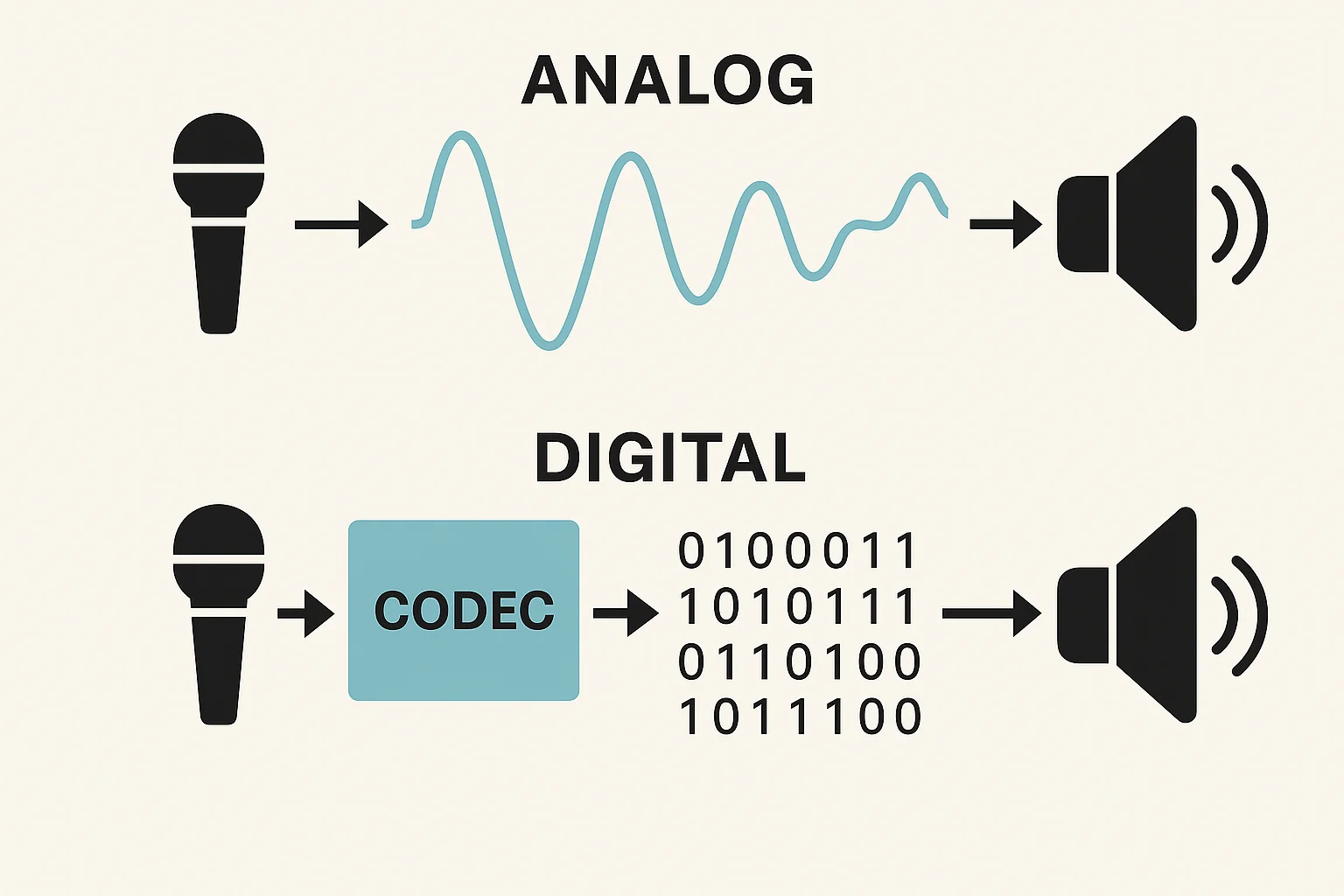
Following on from last year's Digital Data over HF Radio presentation, this session explores the fascinating world of digital voice codecs and how they make modern amateur radio communication possible.
Digital voice has transformed the way amateur radio operators communicate, enabling clear, efficient voice transmission across both VHF/UHF and HF bands while using significantly less bandwidth than traditional analogue methods. But how can high-quality speech be squeezed into such a small data stream?
This presentation answers that question by examining the technology behind today's most widely used digital voice systems.
Digital Voice in Amateur Radio
The session also examines the codecs currently used across the amateur radio community, including:
- Digital Mobile Radio (DMR) voice coding
- Open-source codecs used for HF digital voice
- The advantages and limitations of proprietary versus open implementations
Participants will gain an understanding of why different digital voice systems have evolved, and how codec selection influences compatibility, audio quality, and spectrum efficiency.
Beyond the Codec: Error Correction Matters
Compressing speech is only part of the challenge. Radio channels are noisy, signals fade, and data is often corrupted during transmission.
This presentation investigates how channel coding and forward error correction (FEC) work alongside speech codecs to improve reliability. We'll explore how different levels of error protection affect real-world performance, particularly under weak-signal HF conditions where every bit counts.
Who Should Attend?
Whether you're curious about digital voice, interested in how DMR works, experimenting with HF digital modes, or simply want to better understand the technology behind modern amateur radio communications, this presentation offers an informative and practical introduction to the field.
Join us as we uncover the engineering that allows clear speech to be transmitted using remarkably little bandwidth—and discover why digital voice continues to play an increasingly important role in amateur radio.
SGARS welcomes visitors – please join us.